





What is wrong with GACL’s boiler project that keeps running into trouble
Free article
GACL’s bid to shield chemical production from gas cuts has hit environmental hurdles over its Rs.105.50-crore switch to solid-fuel boilers.
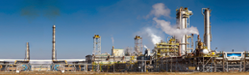
Gujarat Alkalies and Chemicals Limited's attempt to protect its steam-generation operations from natural gas supply restrictions has run into a difficult environmental clearance hurdle. The company's proposal to install two 25-tonne-per-hour solid-fuel boilers at its Ranoli petrochemical complex in Vadodara was returned by the Expert Appraisal Committee during its 142nd meeting on October 5, 2026. The committee's objections reveal that what began as an operational response to fuel insecurity has become a wider examination of environmental compliance at an existing chemical manufacturing facility.
The trigger is GAIL's proposed 35% reduction in natural gas supply. Gujarat Alkalies informed the committee that GAIL had issued a notice requiring this curtailment, prompting the company to seek an amendment to its November 2015 environmental clearance. The proposed solution is a Rs.105.50-crore boiler installation using Atmospheric Fluidized Bed Combustion technology, capable of accommodating different solid-fuel combinations. The company expects natural gas consumption to decline from 164,904 standard cubic metres per day to 83,712 standard cubic metres per day, representing a reduction of approximately 49.2%—substantially greater than the notified supply curtailment. This raises an important question about how far the company intends to restructure its long-term fuel dependence.
The proposed boilers would consume 228 tonnes of coal/biofuel daily, while three existing gas-fired boilers with capacities of 15, 8 and 30 tonnes per hour would be dismantled. Three other gas-fired boilers would remain available as standby units. Gujarat Alkalies argues in its Environmental Management Plan that the new configuration would lower steam-generation costs, improve operating efficiency, simplify associated infrastructure and provide greater fuel flexibility. However, the documents do not establish a quantified reduction in operating expenditure.
The principal regulatory obstacle is the project's location within a Critically Polluted Area. The committee was unwilling to advance the proposed coal substitution without comments from the Gujarat Pollution Control Board. Although the company has proposed electrostatic precipitators, bag filters, cyclone separators, limestone dosing and nitrogen-oxide control systems, the committee sought an assessment of the fuel change in the context of the area's existing pollution classification.
An additional difficulty emerged when the committee recorded that only 7% of the plant premises had been developed as greenbelt. Gujarat Alkalies must now submit an action plan demonstrating compliance with requirements applicable to critically polluted areas under the October 31, 2019 office memorandum. The committee also demanded details of show-cause notices issued by the State Pollution Control Board and their corresponding closure reports. The minutes do not disclose the subject or current status of those notices.
The environmental implications of the fuel switch are substantial. The company estimates annual ash generation of 21,500 tonnes, while contaminated barrels, containers and liners would increase from 76.8 to 426.8 tonnes annually. These changes introduce additional waste-handling and disposal obligations even as the company proposes to reduce industrial effluent through reuse of boiler blowdown.
The commercial stakes are significant. The Rs.105.50-crore project includes Rs.40 crore for boilers and auxiliaries, Rs.18 crore for civil works, Rs.12 crore for electrical systems and additional investments in coal, ash, biomass and lime-handling infrastructure. Gujarat Alkalies anticipates implementation within 12–18 months after obtaining the necessary approvals.
For now, the committee has returned the environmental clearance amendment in its present form rather than recommending approval. This is not a permanent rejection, but it leaves the fuel-diversification timetable exposed to regulatory uncertainty.
The larger question is whether gas-constrained chemical manufacturers operating in critically polluted industrial regions can secure alternative fuel supplies without creating new environmental obstacles. For Gujarat Alkalies, demonstrating regulatory acceptability has become as important as securing the fuel itself.
Proposal background: 15 key points
- Project promoter: Gujarat Alkalies and Chemicals Limited, a Gujarat government-promoted enterprise engaged in manufacturing basic chemicals, specialty chemicals and downstream chemical products.
- Project location : Existing petrochemical manufacturing complex at Ranoli, Vadodara district, Gujarat. The facility has been operating since 1973 and occupies approximately 197,512 square metres.
- Proposal identification: IA/GJ/IND3/592755/2026; file number IA-J-11011/281/2026-IA-II(I). The application was submitted on September 28, 2026, seeking an amendment to the existing environmental clearance.
- Proposed capacity: Installation of two solid-fuel-fired boilers, each rated at 25 tonnes per hour, providing a combined steam-generation capacity of 50 tonnes per hour.
- Estimated project cost: Rs.105.50 crore, comprising boiler equipment, fuel-handling facilities, ash management, pollution-control infrastructure, electrical systems and civil construction.
- Reason for fuel substitution: GAIL issued a notice for a 35% reduction in natural gas supply. Gujarat Alkalies proposed alternative boiler fuels to improve steam-supply reliability and reduce dependence on natural gas.
- Proposed natural gas reduction: Consumption would fall from 164,904 to 83,712 standard cubic metres per day, a reduction of 81,192 standard cubic metres per day, or approximately 49.2%.
- Solid-fuel requirement: The two boilers are projected to consume 228 tonnes of coal/biofuel daily. The combustion system is designed to accommodate different coal grades and fuel blends, including lignite and biomass.
- Boiler replacement programme: Three existing gas-fired boilers of 15, 8 and 30 tonnes per hour would be removed. Three other boilers of 18, 7 and 30 tonnes per hour would remain as standby facilities.
- Technology and emission controls: The project proposes Atmospheric Fluidized Bed Combustion technology with electrostatic precipitators, cyclone separators, bag filters, lime dosing, selective non-catalytic reduction and emissions monitoring systems.
- Land requirement: No additional land acquisition is proposed. Around 1.5 acres of existing available plant land has been identified for the boiler complex and associated facilities, with the detailed area breakup covering approximately 1.321 acres.
- Water and wastewater: The proposed environmental clearance amendment would increase the permitted water requirement from 6,245 to 6,267 kilolitres per day. Industrial effluent excluding salt washery would decline from 2,461 to 2,459 kilolitres per day through reuse of boiler blowdown for dust suppression.
- Additional waste generation: The proposed boilers would generate approximately 21,500 tonnes of ash annually. Contaminated containers and liners would increase from 76.8 to 426.8 tonnes annually, while used oil generation would increase from 25.2 to 30 tonnes annually.
- Earlier environmental permissions: The facility received environmental clearances in February 2008, May 2011 and November 2015, followed by an amendment in July 2016. Its existing Consolidated Consent and Authorisation, issued in December 2023, remains valid until December 31, 2028.
- Committee outcome and next steps: At its October 5, 2026 meeting, the Expert Appraisal Committee returned the proposal in its present form. The company must obtain Gujarat Pollution Control Board comments on the fuel switch, submit an appropriate greenbelt compliance action plan and provide show-cause notice details with closure reports before seeking further consideration.
Products and related news
Request a free newsletter trial covering your products and business interests.
Request a free trialOur team will confirm activation and access.